What to Look For in a Homeschool Literacy Program
Hey, just so you know … This post includes affiliate links. That means if you use them to make a purchase, I may earn a commission. You can read my full affiliate disclosure HERE.
Choosing a homeschool reading program is a big decision. It's important to choose resources for teaching literacy that will meet your child's needs, your family’s homeschool style, is engaging and fun, and is backed by reading science.
Here are 4 steps you can take to ensure all of the above, plus learn one of the most helpful tools you should be using in your homeschool reading instruction.

Steps to Choosing A Homeschool Literacy Program
1. Choose the Appropriate Level
If you're working with multiple children, choosing a literacy program that enables you to meet varying needs, skill, and grade level at the same time can be helpful. Some programs offer many levels, are more flexible than others, and may allow you to customize the schedule, environment, and reading materials to your child's ability.
2. Make It Multisensory
When it comes to supporting varying learning needs and styles, not all homeschool reading programs are created equally. Some programs focus on auditory learners, while others are designed for visual learners.
Look for one that aligns with your child's learning style and is a multi-sensory approach so they don't get frustrated or bored with the material. The goal is to reduce the learning burden (especially for struggling readers), by providing the information in the way that promotes their learning, at the time they are ready to retain it.
3. Look For Simplified Language
Sifting through reading curriculum is a big deal, and for some homeschool parents, it can feel a little intimidating. It isn't uncommon for programs to use complex language that is difficult for kids and parents to understand.
Teaching reading is a big deal for homeschool families, so look for a literacy program that helps support parents with clear instructions, simple language and provides the tools needed to help the whole family succeed. Tip: the best curriculum will help you to feel confident and prepared, while also giving you the tools to make learning literacy skills fun and exciting for your kids.
4. Make Sure It Is Easy To Use
One of the best things about not being tied down to a public school is that homeschool doesn't just happen at home!
When looking for a reading program, think about how you homeschool. Are you nature lovers? Do you travel a lot? Part of the magic of homeschooling is the freedom — and carrying a pile of manuals and workbooks with you isn't ideal. Choose a program that fits your family, not a program that your family has to fit into.
A Science of Reading Homeschool Curriculum
When considering a homeschool literacy program for your elementary students, look for one that covers all five pillars of literacy in a connected manner.
The 5 Pillars of Literacy
Phonemic Awareness
Phonemic awareness refers to a student's ability to hear, identify and manipulate sounds in words. A good homeschool reading program will teach this skill by using a variety of fun games that require children to hear, identify and manipulate sounds in words. Once they have mastered this skill, they can read on their own with greater ease and understanding.
Phonics
Phonics is the second important skill in reading instruction; it teaches students how letters correspond to sounds in words. Once kids understand that letters work together to make up words, they can apply their knowledge of phonics rules by sounding out words letter by letter until they get the correct pronunciation down pat.
Vocabulary
When looking for an exceptional homeschool literacy program, you should look for one that focuses on vocabulary building. It should have games with words and activities that help your child learn their meanings.
A good homeschool literacy program will also help your child find ways to use these new words in conversation and writing. This will give them confidence as they build their knowledge of language and writing basic skills.
Fluency
Fluency refers to how fast your child reads aloud without stumbling over individual words or phrases within sentences. Fluent readers can easily comprehend what they're reading because they don't have to slow down when encountering unfamiliar words or concepts, which allows them to stay focused on what matters most — getting meaning from text!
Comprehension
Reading comprehension helps children learn how to think critically. When you read something, you need to understand what it means and how it relates to our world. Reading comprehension skills also help children learn how to use logic and reason to make decisions based on what they have read or heard. This process helps children develop critical thinking skills that will last throughout their lives.
Scarborough's Rope & Why You Need It
If you’ve never heard of Scarborough’s Rope, you might just be missing out on one of the most helpful guides to designing your homeschool reading instruction.
Scarborough’s Rope was developed by Dr. Hollis Scarborough and demonstrates how all aspects of literacy must be woven together for children to master reading skills.
This means that all five pillars of early literacy must be taught together so that kids fully understand how to read.
The reading rope contains two strands: the upper and lower strand.
The upper strand covers language comprehension, including background knowledge, vocabulary, English language structures, verbal reasoning, and literacy knowledge.
The lower strand is all about word recognition, including phonological awareness, decoding, and sight recognition.
When broken down like this, it makes sense to look for a curriculum that incorporates the reading rope. Unfortunately, many homeschool reading programs spend much time teaching each pillar individually, leaving kids frustrated with learning gaps.
How Phonics in Motion Weaves Together All 5 Pillars of Reading
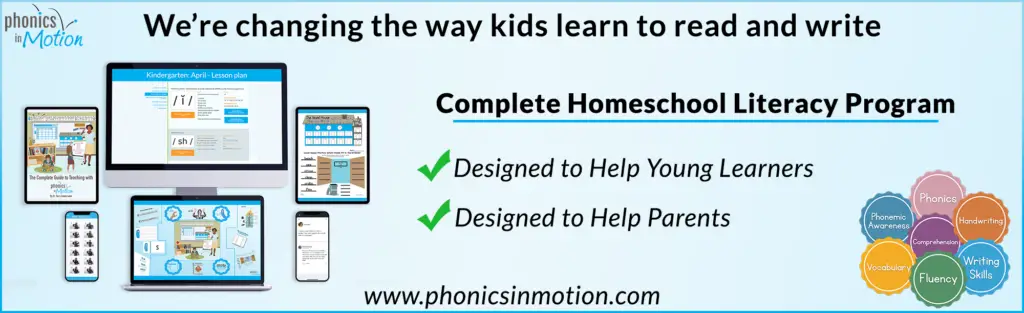
Phonics in Motion is a multisensory approach that delivers on the Science of Reading. Just as important though, it does so in a way that truly engages young readers, making it simple and wildly fun. It teaches kids how their brains work best – through story and motion.
Developed by literacy expert Dr. Terry Kindervater, the program weaves together all five pillars of literacy with four daily routines while keeping learning fun and high energy. The entire family will want to join in!
Instead of giving kids complex instructions for language rules and handwriting skills, the stories are the instructions! Dr. Kindervater developed these stories so kids aren’t tied to books to remember literacy rules. Instead, they memorize kid-friendly stories that they can take with them through any situation.
Here are some of the ways Phonics in Motion helps infuse every experience with easy lessons in literacy instruction, and helps build a culture of learning and love of reading for young children.
Routine 1: Using Kinesthetic Motions for the Phonemes
Phonemes are the smallest unit of language, and there are a lot of them. That’s why it is so tricky for kids in primary grades to remember all of the rules!
By using a Kinesthetic Motion for the Phoneme (KMP), kids can feel the tension in a sound, helping them get it right faster. KMPs are unique motions for each phoneme that help anchor a sound in the brain, meaning that when kids can’t remember the sound, they can override it and match a motion instead.
Routine 2: Language Calendar
The Language Calendar is the glue that holds literacy instruction together. This daily routine models language for kids, allowing them to work independently at their own pace, but also providing a critical parent-child connection in the language learning process.
Routine 3: Vowel House
The Vowel House is a unique way to help kids learn short and long vowels, r-controlled vowels, and diphthongs. Most kids find these tricky, so the Vowel House aids them in recognizing all of the spellings they can use to write each sound. This reduces choice, helping them zone in on the right answer faster.
Routine 4: Reading & Writing Monster
If you’ve ever tried to teach a kid to hand write, you’ve probably seen them write letters backward (or whole sentences!). The Reading & Writing Monster is a beloved character in Phonics in Motion that helps kids learn directionality and letter formation through silly, high-energy stories that kids remember every time they write a letter (it's definitely a favorite part for many kids)!
Phonics in Motion Complete Homeschool Literacy Program
Using Phonics in Motion in your homeschool is a great way to give your kids a head start on important foundational skills.
Learn more about this effective phonics curriculum here. You can also check out the complete homeschool literacy program that includes all four multisensory routines and materials, online resources, plus the time-saving lesson plans for the busy homeschooling mom!

I'd love to hear from you: what educational program do you love for teaching literacy in your homeschool? What tips do you have for developing successful readers? Drop a comment below!

Related Posts
- How to Easily Create Custom Reading Comprehension Worksheets
- Recommended Apps for Homeschooling (and why you should use them)
- What are the Best Reading Apps for Kids?

Want some techie homeschooling tips and inspiration delivered to your inbox? Sign up here for weekly-ish emails from me.
Techie Homeschool Mom is a participant in the Amazon Services LLC Associates Program, an affiliate advertising program designed to provide a means for sites to earn advertising fees by advertising and linking to Amazon.com. You can read my full affiliate disclosure HERE.