
Why Typing Practice is Important for Kids (and How to Encourage Them)
Hey, just so you know … This post includes affiliate links. That means if you use them to make a purchase, I may earn a commission. You can read my full affiliate disclosure HERE.
For us techie homeschoolers who utilize online classes and educational tools, it’s easy to see how typing has become a fundamental skill for our kids to learn. Computers, smartphones, tablets and other technology have become very much integrated into our lives, shaping the way we communicate, work, and learn. Learning to type quickly and accurately at an early age will help our kids effectively navigate and communicate in this digital landscape.
Some kids love the challenge of learning how to type; for others, it’s a chore (I’ve got both kinds). Let’s take a look at some effective strategies you can use to encourage and support your kids in practicing typing, so they can master this essential skill.
** This is a sponsored post. I received this product or compensation for review purposes only and was compensated for my time. I was neither asked nor required to share a positive review; all opinions are my own. READ HERE for more information.
Benefits of Typing Practice for Kids
One of the biggest advantages of typing practice is, of course, improved typing speed and accuracy.
With regular typing practice, kids will not only learn how to type, but will develop the speed and precision that allows them to express their thoughts and ideas efficiently. Hopefully, this translates to better productivity in their work…and completing assignments, essays, and reports faster means there will be more room for other things they enjoy!
Typing practice also can help kids improve their focus and concentration. As they engage in typing exercises and develop muscle memory, their ability to concentrate improves, which has a positive effect on their learning experiences.
Finally, typing practice cultivates digital literacy, and gets our kids familiar with keyboard layouts, basic computer functions, and software applications. These skills are foundational to broader digital literacy, and will have an impact on their ability to adapt to new technologies throughout the years.
When you invest in typing practice for your kids, they will gain one of the valuable computer skills for kids that benefit them not only academically, but in their everyday lives.
How to Encourage Kids to Practice Typing
Even a little bit of typing practice each week can be beneficial, but exactly how much your kids should do will depend on their age, skill level, and individual circumstances.
Start with short sessions so they don’t get overwhelmed; younger kids or beginners might do just about 10-15 minutes a few times a week. As they progress in their typing skills, gradually increase practice time. Aim for about 20-30 minutes, three to five times a week until they are proficient. This may sound like a lot, but the extended duration will give them plenty of time for focused practice, reinforcement of skills, and improving their typing speed and accuracy.
Here are a few ways you can motivate your kids to buy into learning how to type.
Make it enjoyable and engaging
There are a couple of ways you might do this. First, there are a variety of online typing games and interactive activities you can use that help make typing fun, which motivates kids to practice.
If your kids enjoy competition, you might also try typing challenges to encourage improvement, such as setting goals, competing against friends or siblings, or participating in typing races online.
Finally, leverage gamification elements and rewards when possible. Incorporate badges, levels, or virtual rewards to create a sense of progression and accomplishment. Making typing feel like a game will often keep them eager to continue practicing!
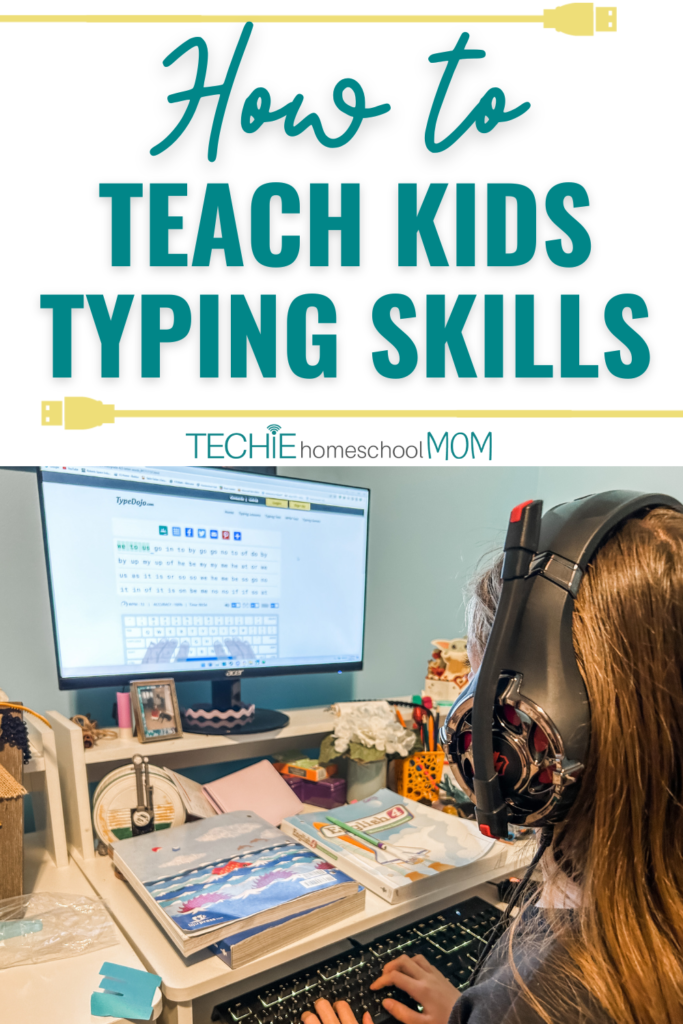
TypeDojo, a FREE online typing platform, is a resource I highly recommend that can help motivate your kids to practice typing. They offer a wide range of interactive typing exercises, games, and tests that are designed to help anyone (including kids) learn and improve their typing skills quickly.

Incorporate it into their daily routine
This is essential if you want your kids to develop and improve their skills. The best way I’ve found to do this is to allocate specific days of the week I am going to assign typing practice, and then adding it to my kids’ online homeschool planners. By doing this, I can help ensure consistency as typing practice becomes a regular part of our routine.
Additionally, you can encourage kids to practice typing during typical homeschool activities that involve writing, such as completing a report or writing in a journal. They can focus on their typing technique and accuracy when working on these tasks.
Provide the right resources and tools
Having the right tools to use can definitely make typing more enjoyable! Look for typing software and online platforms that are designed for children when you are looking for your structured lessons.
In addition, consider equipping your child with an ergonomic keyboard. These keyboards are designed to promote comfortable typing, which reduces strain and minimizes the risk of repetitive strain injuries. They often feature split designs, adjustable angles, and wrist rests, which all support proper alignment of your hands and arms during typing practice sessions.
Set goals and track progress
Goals will vary depending on the age and stage of your kids, but here are some general guidelines. Keep in mind that each child learns at their own pace, so make sure to focus on their individual growth and improvement rather than strict age-based expectations.
Ages 6-8: Kids will learn the basics of typing, becoming familiar with the keyboard layout, locating and typing letters accurately, and slowly increasing typing speed. A good goal would be to average a typing speed of around 10-15 words per minute (WPM) with reasonable accuracy.
Ages 9-11: Kids can work on improving speed and accuracy as they progress. Goals might include typing simple words and sentences faster, and becoming comfortable with basic punctuation and capitalization. Aim for 20-30 words per minute with improved accuracy.
Ages 12-14: Work on refining typing skills and increasing speed and accuracy. Goals might include typing longer passages or paragraphs with speed and accuracy, aiming for 40-50 WPM and mastering punctuation, capitalization, and basic formatting.
Ages 15+: Your teens can aim for more advanced typing skills, including typing complex texts, demonstrating proficiency in using special characters and keyboard shortcuts, and effectively typing longer documents or essays with fluency. Aim for 60-70+ WPM.
One way you can encourage your kids to reach their goals is with a typing speed test. Kids often love typing speed practice for several reasons.
First, typing test practice gives them that sense of challenge and competition. Some kids really like measuring their abilities and comparing their results with others.
Secondly, typing speed tests are a great way kids can track their skills and see the progress they are making towards their goal. Seeing their WPM score can be rewarding, as it provides a clear measurement of their typing proficiency (and gives a benchmark for future progress).
Taking a typing speed test can help your kids build confidence as they work towards their typing goals. Seeing tangible evidence of their skills gives their efforts validation in practicing typing, and offers them a way to challenge themselves, track their progress, and have fun.
Offer support and guidance
As your kids learn to type, you can encourage them by being patient and offering assistance when they need it. Create a positive and nurturing learning environment, celebrate their progress, and provide the resources, tools, and practice opportunities to help them enhance their typing skills.
Also important is to encourage breaks if they are typing for extended periods. Teach them to take short breaks every 10-15 minutes to stand up, stretch their fingers, and relax. This will help prevent strain and maintain focus – and it’s also just a great habit to get into when you are working at a computer. Build the habit and routine now!
Motivating your kids to practice typing is so helpful for their skill development and future success. When you incorporate typing games, challenges, and rewards, along with providing great resources and tools, you will help ensure learning to type is a fun experience for your kids.
English Typing Test Certificate
Once your kids have done a bit of typing speed practice, they might love to take TypeDojo’s English Typing Test and get feedback (and a professional certificate!).
To start, they’ll choose how long they want the test to be (there are 1 minute, 3 minute, or 5 minute options). Next, they’ll select their grade, and one of a variety of typing activities to focus on during the test.

My kids love the real-time feedback they receive after taking a typing test (and the printable certificates!). And I love seeing their progress, and watching them work hard to improve their skills.

TypeDojo’s English Typing Test provides an effective way to help your kids learn to type faster. With its timed environment, real-time feedback, and progressive difficulty levels, children can practice typing, track their progress, and continually challenge themselves to improve.
Fostering Real-life Skills in Your Homeschool
Encouraging your kids to learn to type as part of their homeschool experience is truly a valuable investment. By sharing the importance of typing skills and providing engaging resources like the ones mentioned above, you can make the learning process even more enjoyable.
Through motivation, patience, and a positive learning environment, you’ll empower your kids to become better typists, equipped with a fundamental skill that will benefit them throughout their lives.
I’d love to hear from you in the comments: what programs have you used to help encourage your kids to type? Share below!

 Need some help managing your family's screen time?
Download a set of tech time guidelines and tailor it to your family's needs.
Sign up to receive Techie Homeschool Mom's Family Tech Time Guidelines
Related Posts
- Best Programs for Teaching Kids How to Type
- 5 Ways to Use Canva to Teach Graphic Design in Your Homeschool
- Techie Ways to Help Your Child Struggling with Bad Handwriting

Want some techie homeschooling tips and inspiration delivered to your inbox? Sign up here for weekly-ish emails from me.
Techie Homeschool Mom is a participant in the Amazon Services LLC Associates Program, an affiliate advertising program designed to provide a means for sites to earn advertising fees by advertising and linking to Amazon.com. You can read my full affiliate disclosure HERE.